By ALO360 Editorial board
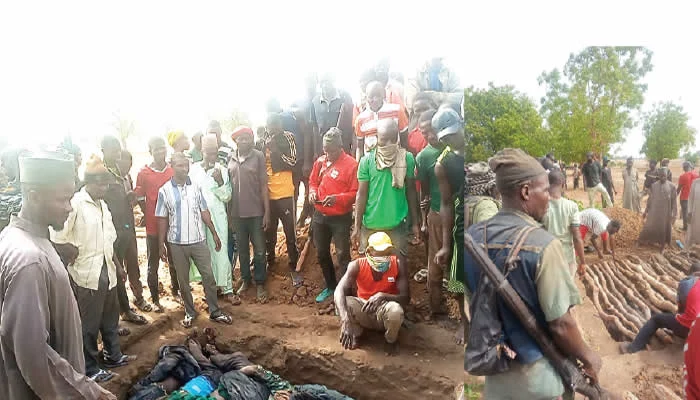
Between January 27 and February 26, Nigeria recorded 1,003 violent deaths. That translates to roughly 34 Nigerians killed every day for one month.
StatiSense published data obtained from ACLED (Armed Conflict Location & Event Data), an independent, impartial global monitor that collects, analyses, and maps data on conflict and protest, showing that Nigeria ranks third globally in fatalities during that period, behind Ukraine and Sudan.
That fact alone should shake the conscience of the nation.
Instead, we carry on as though nothing is fundamentally broken.
A Country Bleeding in Plain Sight
From Kaduna to Sokoto, from Zamfara to Plateau, from Benue to Kwara, killings and abductions have become frighteningly routine. Entire communities in the Middle Belt, long regarded as Nigeria’s food basket, live under siege. Farmers abandon their lands. Villages empty overnight. Churches, mosques and highways have turned into hunting grounds.
Families now gather not for weddings but to raise ransom. Millions of naira exchange hands in desperate attempts to free kidnapped loved ones. Meanwhile, the dead are reduced to statistics.
We report massacres the way we report rainfall figures.
The scale of violence suggests a country at war with itself. Yet the political class behaves as though the real emergency is the 2027 election.
Dangerous Rhetoric in Dangerous Times
What is even more troubling is the tone of those entrusted with securing the nation.
In a widely circulated video after the High-Level African Counter-Terrorism Meeting in Abuja, Nuhu Ribadu likened Nigeria’s terror crisis to a disagreement between brothers. He suggested that efforts were ongoing to “reach an understanding.”
While non-kinetic approaches, including dialogue and rehabilitation, are legitimate components of counterterrorism strategy, language matters. Words from those in authority carry weight. To victims who have buried loved ones, describing terrorists as errant “brothers” feels dismissive of their trauma.
Similarly, in another viral remark, the Nigerian Army stated that Boko Haram fighters are still Nigerians and should be considered for rehabilitation while being held accountable.
Rehabilitation is not the problem. The perception of leniency is.
No country confronting insurgency can afford to sound unsure of its moral clarity. When citizens are dying at the rate of 34 per day, the government must project firmness, resolve and empathy. Anything less deepens public distrust.
The Illusion of Control
We have heard “marching orders” before. During the administration of Muhammadu Buhari, such directives became routine. Yet the killings persisted.
Now, under Bola Tinubu, Nigerians fear a continuation of rhetoric without decisive change.
Reports have also surfaced about negotiations and ransom payments. AFP reported that the federal government paid over ₦2 billion to secure the release of children and staff abducted from St. Mary’s Catholic Private School in Papiri, Niger State. If true, that raises difficult but necessary questions about sustainability and deterrence.
When the state appears to negotiate repeatedly with violent actors, it risks incentivising further kidnappings.
The Primary Duty of Government
The constitution is clear. The primary purpose of government is the welfare and security of the people.
By that standard, Nigeria is failing.
A nation where over 1,000 people can die violently in one month without a declared war cannot claim normalcy. A nation where insecurity defines daily existence cannot prioritise zoning formulas and campaign permutations.
Yet much of the political conversation revolves around 2027. Media debates focus on alliances, defections and party arithmetic. Meanwhile, the arithmetic of death continues quietly: 34 per day.
History will not judge this era by the sophistication of campaign strategies. It will judge it by whether leaders rose to confront the bloodshed.
Enough Pretence
All is not well with Nigeria, and we must stop pretending otherwise.
This is not about scoring partisan points. Terror does not check party membership before it strikes. It does not ask about religion or region before it kills.
Government must act — decisively, transparently and consistently. It must strengthen intelligence coordination, hold security commanders accountable, disrupt financing networks, and restore territorial control in vulnerable regions. Above all, it must communicate with seriousness befitting the gravity of the moment.
The lives of Nigerians cannot continue to feel cheaper than political ambition.
If 1,003 deaths in one month does not trigger a national emergency mindset, what will?
Nigeria may not have declared war. But the numbers tell a different story.