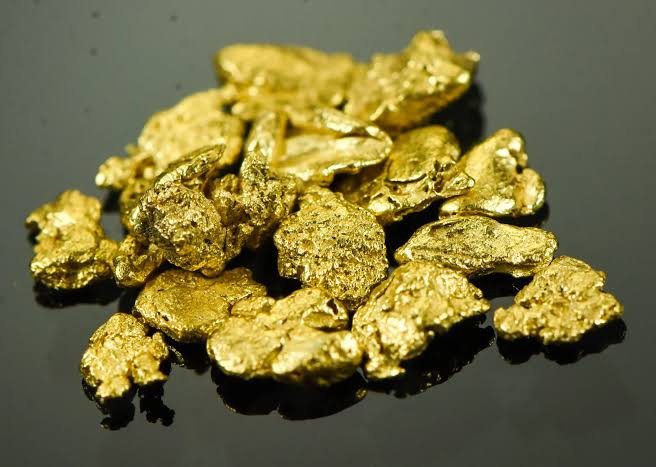
The Central Bank of Nigeria (CBN) has announced that its gold reserves have grown to $3.5 billion. This increase follows the acquisition of newly refined gold that meets the London Bullion Market Association (LBMA) Good Delivery standards.
However, In a statement on Wednesday, March 4. The CBN revealed that the gold was sourced locally through the national gold purchase programme. This initiative is part of efforts to diversify Nigeria’s foreign reserves. The announcement comes as global gold prices surge past $5,000 per ounce.
Solid Minerals Development Fund (SMDF)
The CBN explained that the gold was aggregated by the Solid Minerals Development Fund (SMDF) in collaboration with artisanal and small-scale miners. These operations follow a responsible sourcing framework. Aligned with guidelines from the Organisation for Economic Co-operation and Development (OECD) and the World Gold Council’s London Principles.
Also, At a workshop on strategies to maximise Nigeria’s mineral resources. CBN Governor Olayemi Cardoso stated that the central bank purchased the gold in naira, using prices linked to LBMA benchmarks. He highlighted that this approach strengthens Nigeria’s reserves without using foreign currency. “By buying domestically refined gold, we enhance reserve growth and support macroeconomic stability,” Cardoso said.
Gold as hedge Against Inflation
He also noted that gold is regaining importance globally as a hedge against inflation and financial instability. The domestic gold purchase programme, he added, is part of the CBN’s broader strategy to improve reserve quality and reduce external risks.
Note that, Fatima Umaru, executive secretary of the SMDF, praised the delivery of LBMA-standard gold. As proof of the organisation’s effective formalisation framework and supply chain due diligence.
Also, Kurtuluş Diamondopoulos, director of central banks and public policy at the World Gold Council, commended the partnership between the CBN and SMDF. She said the programme aligns with the 12 London Principles. For responsible gold sourcing and could serve as a model for other countries formalising small-scale mining operations.
Samaila Zubairu, president and CEO of the Africa Finance Corporation, reaffirmed the institution’s support for Nigeria’s mineral sector. He stressed the need for reliable geological data and better mineral processing infrastructure to attract investment. Improve gold recovery rates, reduce environmental harm, and support central bank purchases.
Nere Emiko, executive vice-chairman of Kian Smith Gold Company, called for more investment in exploration and greater transparency in the sector. She noted that Nigeria’s gold reserves remain low compared to peer economies.