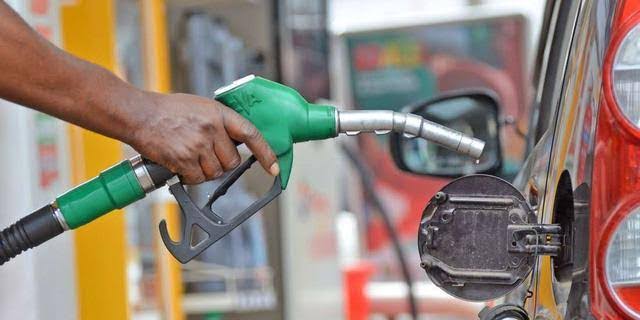
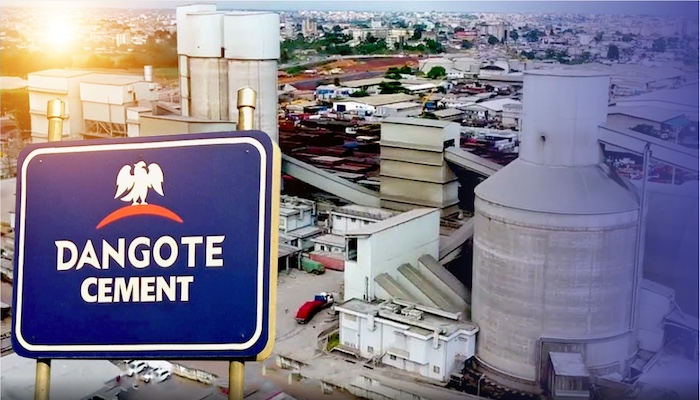
Three companies under Dangote Group strengthen their gas supply agreement with units of Nigerian National Petroleum Company Ltd (NNPC Ltd). These agreements aim to support their growth strategies while aligning with Nigeria’s transition to cleaner energy and industrialization.
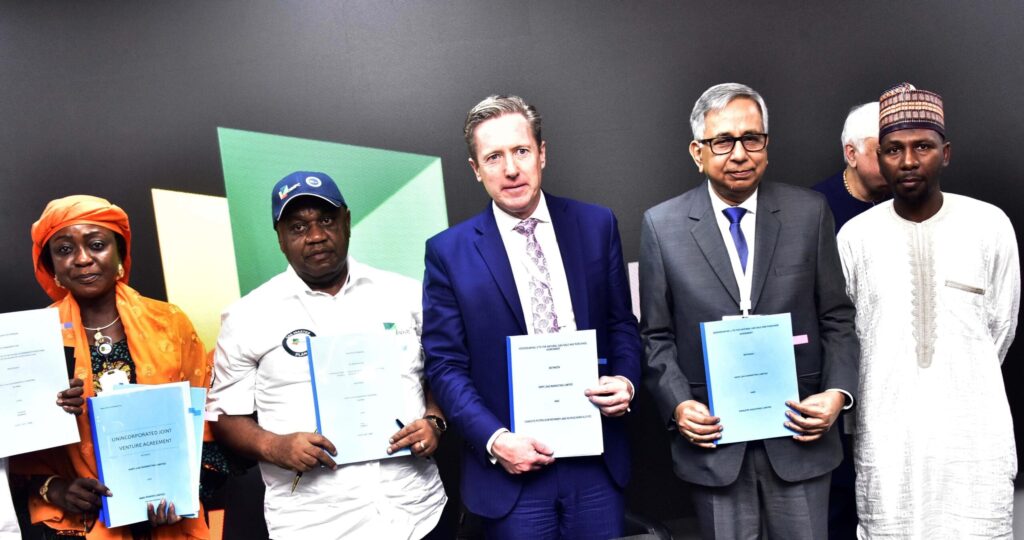
The announcement made during the launch of the Nigeria Gas Master Plan 2026 in Abuja on Friday.
The contract involve Dangote Petroleum Refinery, Dangote Fertiliser Plant, and Dangote Cement Plc, partnering with Nigerian Gas Marketing Limited and NNPC Gas Infrastructure Company. However, the specific volumes of gas contracted not disclosed.
These agreements are part of Nigeria’s broader efforts to boost gas production and consumption. The goal is to use the gas industry to drive industrialization, attract investments, and develop infrastructure.
Key Highlights of the Nigeria Gas Master Plan 2026:
During launch of Nigeria Gas Master Plan 2026, official emphasize Dangote-NNPC agreement mark significant step from policy development to implementation. This move underscores Nigeria’s commitment to leveraging gas as a key driver of economic growth.
“Today’s launch is not merely the unveiling of a document; it represents a deliberate shift towards a more integrated, commercially driven and execution-focused gas sector aligned with Nigeria’s development aspirations,” said the Minister of State for Petroleum Resources (Gas), Rt. Hon. Ekperikpe Ekpo.
“Nigeria is fundamentally a gas nation. With one of the largest proven gas reserves in Africa, our challenge has never been potential, but translation,” Ekpo added.
NNPC Ltd Group CEO Bashir Bayo Ojulari said, “The Plan structured not just to deliver – but to exceed – the Presidential mandate of increasing national gas production to 10 billion cubic feet per day by 2027 and 12 billion cubic feet per day by 2030, while catalysing over 60 billion dollars in new investments across the oil and gas value chain by 2030.”
NNPC recently release Gas Master Plan 2026, aiming to reach 10 billion cubic feet of gas per day production to spur industrialisation and enhance energy security in Nigeria.
Nigeria Gas Master Plan initially launched in 2008 to spur domestic gas usage and generate economic value. The changes in market conditions, gaps in infrastructure and regulatory reforms over the years necessitated a revised framework.