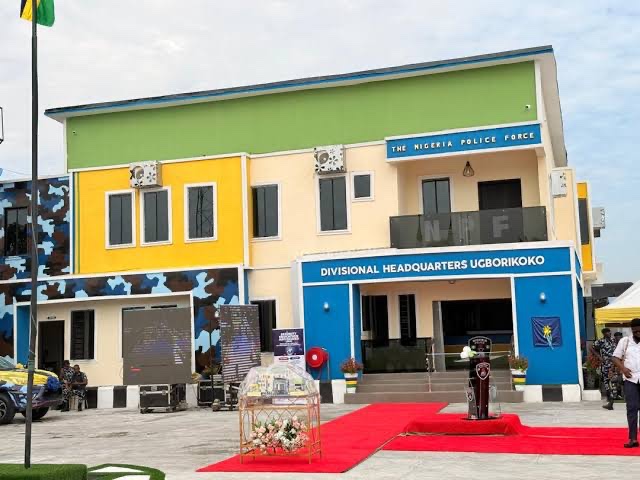
The Delta State Government approved N34 billion for the construction of police divisional headquarters. The approval covered all 25 local government areas in the state. Governor Sheriff Oborevwori announced the decision during a security council meeting in Asaba.
“We have approved the sum of N34 billion for the building of police divisional headquarters across the 25 local government areas,” Oborevwori stated. He emphasized that the project aimed to strengthen security infrastructure statewide.
Project Scope
The construction project targeted every local government area without exception. Each division received specific allocation for modern facilities. The government designed the project to improve police response times and operational efficiency.
Commissioner of Police Olufemi Abaniwonda welcomed the development. “This investment will enhance our capacity to serve and protect the people of Delta State,” he said. He added that the new headquarters would include modern detention facilities and administrative offices.
Funding and Implementation
The N34 billion allocation came from the state security vote and infrastructure budget. The government structured the disbursement in phases to ensure accountability. Contractors received strict timelines for project completion.
Secretary to the State Government Kingsley Emu explained the implementation strategy. “We will monitor each site closely to guarantee quality delivery,” he stated. He noted that the first phase would commence within 30 days of approval.
Security Context
Delta State faced persistent challenges with crime rates in recent years. Kidnapping and armed robbery incidents prompted calls for improved police presence. The new headquarters addressed these concerns through decentralized command structures.
Additionally, the project aligned with the governor’s MORE agenda. This policy framework prioritized security as a prerequisite for economic development. The police infrastructure formed part of broader investments in law enforcement.
Stakeholder Reactions
Traditional rulers across the state praised the initiative. Ovie of Ughelli Kingdom, Wilson Oharisi, described the approval as timely. “Our people have long requested improved police presence in rural areas,” he said. He pledged community support for the construction work.
Civil society organizations also responded positively. However, some groups demanded transparency in contractor selection. They urged the government to publish project timelines and cost breakdowns publicly.