
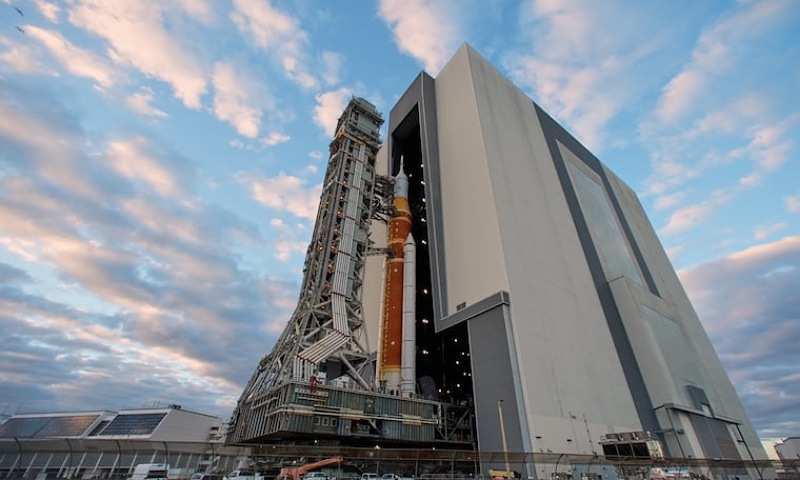
NASA advances its Artemis program with excitement. The agency rolls out the massive Space Launch System rocket. This move sets the stage for the Artemis II mission.
The Historic Rollout
Teams at NASA’s Kennedy Space Center begin the rollout on January 17, 2026. The SLS rocket, topped with the Orion spacecraft, leaves the Vehicle Assembly Building. It travels four miles to Launch Pad 39B.
The journey lasts up to 12 hours. Engineers monitor every step closely. This careful process ensures safety and readiness.
Meanwhile the public watches live streams. NASA shares updates through social media and press conferences. Excitement builds as the rocket inches forward.
Meet the Crew
Four astronauts prepare for this groundbreaking flight. Commander Reid Wiseman leads the team. Pilot Victor Glover handles navigation duties.
Mission Specialist Christina Koch brings expertise in science. Jeremy Hansen, from the Canadian Space Agency, joins as the fourth member. This diverse crew represents international cooperation. They train rigorously for months. Simulations cover every scenario. As a result, they feel confident and ready.
Mission Details
Artemis II marks the first crewed mission around the Moon since Apollo. The 10-day journey tests the Orion spacecraft in deep space. Astronauts will loop around the Moon and return to Earth.
The SLS rocket provides immense power. It generates 8.8 million pounds of thrust at launch. This capability enables long-distance travel. Additionally, the mission validates systems for future landings. NASA aims to return humans to the lunar surface soon.
Upcoming Tests and Launch
A wet dress rehearsal occurs on February 2. Teams fuel the rocket and simulate countdown. This test identifies any issues.If successful, launch windows open from February 6 to 10. However backups exist in March and April if needed. NASA evaluates readiness after the rehearsal. The mission management team decides the final date.
Significance for Future Exploration
This mission paves the way for Artemis III. That flight will land astronauts on the Moon. Diversity and inclusion highlight NASA’s approach.
Furthermore, it inspires new generations. Students and scientists follow closely. As a result, space exploration gains momentum. In conclusion, NASA propels humanity forward. The rollout symbolizes progress toward sustainable lunar presence.