
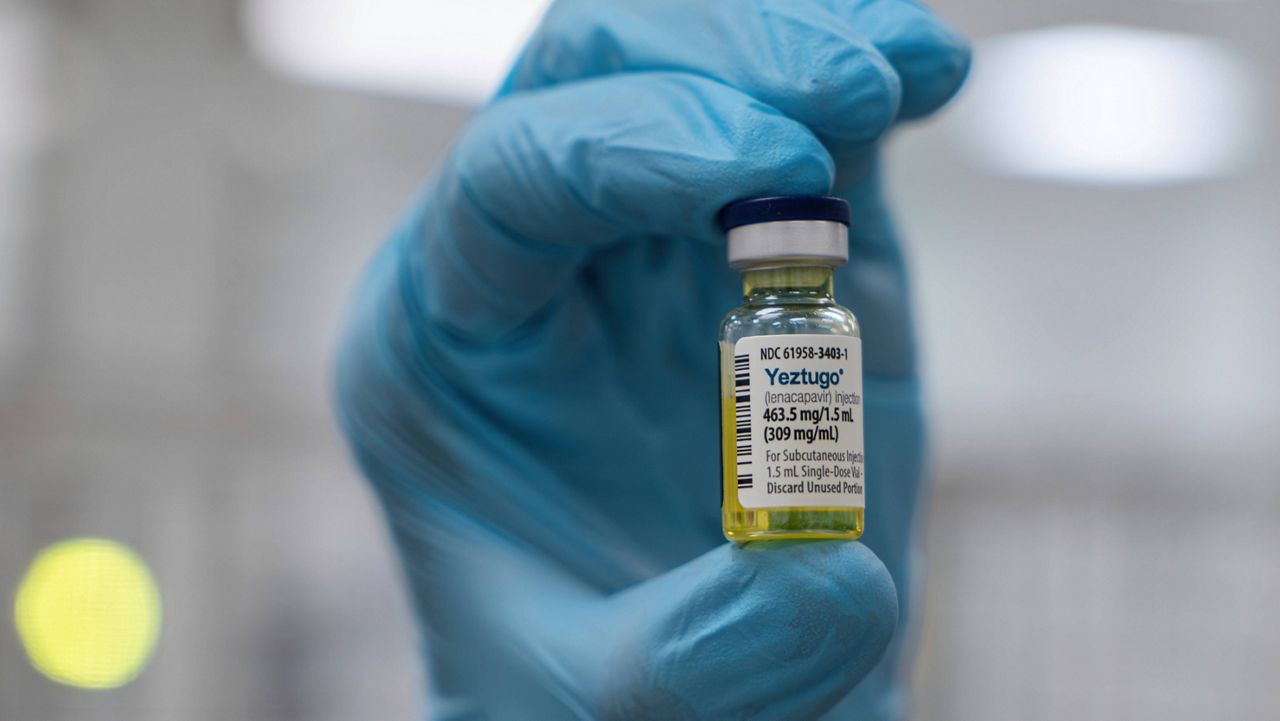
Federal government takes delivery of breakthrough twice-yearly injection as health authorities complete readiness assessments in 10 states and train healthcare workers for nationwide rollout.
Drug Arrives in Country
Nigeria received its first consignment of Lenacapavir, a long-acting injectable drug for HIV prevention, federal authorities announced on Wednesday. The arrival marked a significant advancement in the nation’s efforts to combat the spread of HIV/AIDS.
The National Agency for the Control of AIDS confirmed the delivery in a statement. The agency described the development as a critical step in strengthening prevention efforts and accelerating progress toward ending the epidemic.
How the Drug Works
Lenacapavir functions as a pre-exposure prophylaxis medication that prevents HIV infection before exposure occurs. Unlike daily oral PrEP pills, health workers administer Lenacapavir via injection just twice per year.
Clinical studies demonstrated that the medicine significantly reduces the risk of HIV transmission. Data indicates the drug reduces transmission risk by 99.9 percent, offering near-complete protection when administered correctly.
The World Health Organization recommended the injectable as an additional prevention option in July 2025. The agency described it as a “highly effective, long-acting alternative” for people at substantial risk of infection.
Preparations for Rollout
Federal authorities conducted extensive preparations prior to the drug’s arrival. The National Agency for the Control of AIDS completed readiness assessments in 10 states, including Lagos, Kano, Akwa Ibom, Anambra, Benue, Cross River, Ebonyi, the Federal Capital Territory, Gombe, and Kwara.
Additionally, the agency secured regulatory clearance from the National Agency for Food and Drug Administration and Control. This approval cleared a key hurdle for importation and distribution.
A national training-of-trainers session took place in Abuja, followed by cascade training for frontline health workers in the initial implementation states. These sessions aimed to ensure providers could administer the injection safely and counsel patients appropriately.
Addressing Cost Concerns
The drug’s initial price created significant access barriers for low-income countries. In high-income markets, the annual cost reached approximately 28,000 per person.
However, Nigeria joined other nations in announcing a price-reduction agreement in September 2025. Under the arrangement negotiated at a Clinton Global Initiative meeting, eligible low and middle-income countries can access the twice-yearly injection at approximately 40 per person per year.
Temitope Ilori, Director-General of the National Agency for the Control of AIDS, welcomed the agreement. She said the arrangement would ensure the “breakthrough innovation” is available to those who need it most.