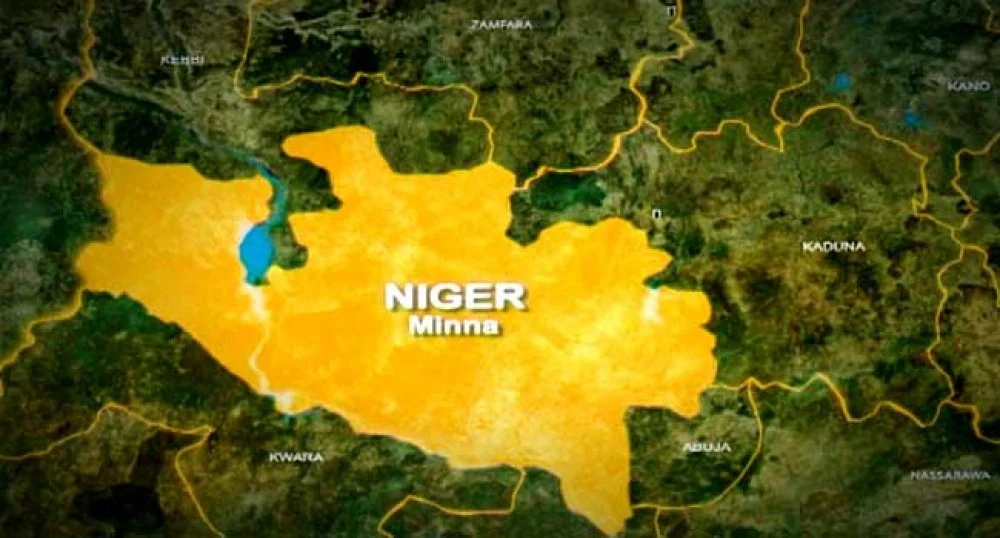
Fear and uncertainty have continued to grip rural communities in Agwara Local Government Area and Borgu Local Government Area of Niger State, a state located in North Central Nigeria, following fresh threats issued by armed terrorist groups after a coordinated assault that left more than forty people dead.
Residents across several settlements bordering Kebbi State, another state in northwestern Nigeria, have begun abandoning their homes in large numbers amid warnings that the attackers plan to return to carry out further killings. Community members say the threats have heightened anxiety and triggered an ongoing wave of displacement, particularly among women, children, and the elderly.
Villagers from Kwana, the final settlement in Agwara Local Government Area, and Tungan Salama near Papiri in Borgu Local Government Area, said they received credible information indicating that the terrorists were regrouping within nearby forest reserves and preparing to strike again.
At the centre of the violence is Kasuwan Daji, a rural border community located between Agwara and Borgu Local Government Areas. The town, widely known for its weekly Wednesday market that attracts traders from surrounding villages, was attacked on Saturday, 3 January 2026.
During the assault, gunmen reportedly tied the hands of their victims before killing forty-two men. Homes, market stalls, and personal properties were set on fire, leaving the community largely destroyed and forcing survivors to flee into surrounding bushes and neighbouring towns.
Residents accused security forces of failing to maintain a sustained presence after the attack. According to multiple accounts, soldiers who were initially deployed to the area reportedly withdrew shortly after arrival, leaving communities exposed and without visible protection.
A resident who spoke on condition of anonymity warned that the continued absence of security could result in irreversible humanitarian consequences.
“Without security there will be a massive and on-going loss of life and permanent displacement of large numbers of people,” he said.
He stressed that the situation required urgent federal intervention, particularly given the proximity of the affected communities to Kainji Lake National Park, a vast forest reserve spanning parts of Niger and Kwara States that has long been identified by security analysts as a hideout for armed groups.
Religious leaders have also raised alarm over the deteriorating security situation. The Director of Communications of the Catholic Diocese of Kontagora, Reverend Father Matthew Kabirat, confirmed that priests and parishioners were relocating from the affected areas due to fears of renewed attacks.
“As I am talking to you, our parishioners and priests are leaving for fear of possible attacks. The security personnel that came after the incident cannot be found, there are no signs of help for the people. These terrorists are having a field day and our people are moving from that axis for fear of either being killed or kidnapped,” Kabirat said.
Providing further context, Kabirat explained that the wave of violence began on Sunday, 28 December 2025, when heavily armed terrorists arrived in the area on approximately thirty motorcycles, with two people riding on each motorcycle.
“The victims are both Christians and Muslims; they also kidnapped an unknown number of women and children. They set the place on fire. It was so intense that the smoke could be seen fifteen kilometres away at Papiri,” he said.
According to him, the attackers moved freely through several villages including Sokonbora, Bako-Mission, and Shafaci, before crossing into Kebbi State, where additional killings and arson attacks were recorded.
“They crossed into Kebbi State, north of Shafaci, and proceeded to the village of Kaiwa, where they killed five people and set fire to houses and grain stores. They then moved on to Gebe, where they killed two more people,” Kabirat added.
The attackers reportedly returned on Thursday, 1 January 2026, burning documents at a police station before continuing their movement through surrounding communities.
Another resident, Abuka, described the psychological toll of the violence, particularly on families already affected by previous kidnappings.
“Between Sunday, 28 December 2025 and Saturday, 3 January 2026, this group of bandits have been roaming freely without being challenged by security forces,” he said.
He added that children from Papiri who were recently released from captivity had been retraumatised.
“As a result, the Papiri school children, who were recently released from captivity, including my daughter, have been further traumatised as they are forced to hide in the bush with their families,” Abuka said.
Despite repeated attempts, officials of the Niger State Police Command could not be reached for comment.
However, the Niger State Commissioner for Information, Obed Nana, confirmed the attacks and appealed to residents to remain calm, assuring them that efforts were ongoing to prevent further violence.
“The Government of Niger State is deeply saddened by this unfortunate tragedy and is collaborating with the Federal Government of Nigeria and security agencies to forestall further attacks, while calling on the people to remain vigilant,” he said.
At the federal level, President of the Federal Republic of Nigeria, Bola Ahmed Tinubu, ordered an extensive manhunt for the perpetrators on Sunday, 4 January 2026. The President directed the Minister of Defence, the Chief of Defence Staff, the Service Chiefs, the Inspector General of Police, and the Director General of the Department of State Services to track down those responsible and ensure they face justice.
“These terrorists have tested the resolve of our country and its people. They must face the full consequences of their criminal actions,” the President said.
Meanwhile, Senator Natasha Akpoti-Uduaghan, who represents Kogi Central Senatorial District in Nigeria’s National Assembly, condemned the attack in a statement issued in Abuja, Nigeria’s federal capital territory, on Monday, 5 January 2026.
Describing the killings as “heartbreaking, senseless, and a tragic reminder of the worsening insecurity confronting many Nigerian communities,” the Senator called for swift and transparent action by security agencies.
“Nigeria cannot afford to normalise these tragedies,” she said. “Protecting lives and property is the foremost duty of any government, and urgent steps must be taken to restore peace and confidence among our people.”