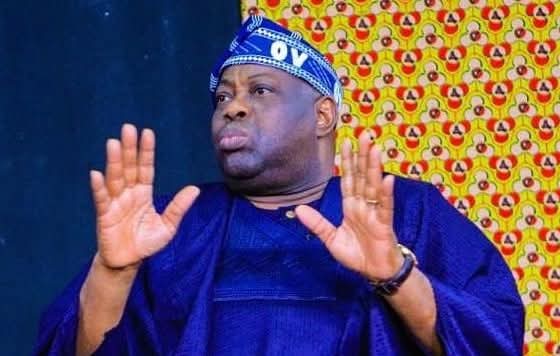
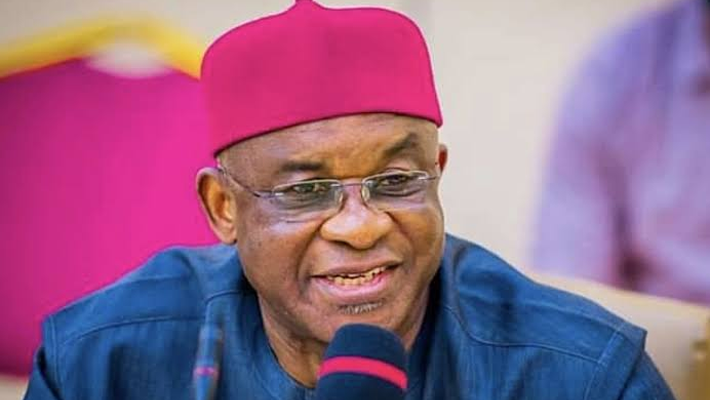
David Mark, former Senate president and national chairman of the African Democratic Congress (ADC), has warned Godswill Akpabio, Senate president, to stop speaking for the Independent National Electoral Commission (INEC) on the electronic transmission of election results.
Mark issued the warning on Saturday in Abuja at the launch of The Burden of Legislators in Nigeria, a book written by former senator Effiong Bob.
‘Let INEC Decide’
Reacting to the controversy surrounding the Electoral Amendment Bill, Mark said the national assembly must follow public demand instead of assuming the powers of the electoral umpire.
The ADC chairman said the upper chamber should pass the act with real-time transmission being spelled out.
He stressed that Nigerians overwhelmingly support electronic transmission and want the provision clearly entrenched in law.
“We are asking for electronic transmission,” Mark said.
“INEC should decide whether it can implement it or not. The national assembly should not speak for INEC; it should speak for the people.”
Mark added that if INEC later admits it cannot implement electronic transmission, the responsibility must lie squarely with the commission.
“If INEC cannot do it, that failure belongs to INEC,” he said.
Akpabio Defends Senate’s Decision
Responding, Akpabio rejected claims that the Senate restricted result transmission.
He said lawmakers deliberately removed only the word “real-time” while leaving all transmission options open.
“The senate did not block any method,” Akpabio said.
“You can move results by bicycle, by phone, or by any other means you choose.”
He insisted that INEC must retain full discretion over how it transmits election results.
Why We Removed Real-time
Akpabio said the Senate dropped the real-time requirement to shield INEC from avoidable legal battles.
He argued that unstable network coverage could trigger endless court cases during election petitions.
“Once the law says ‘real-time’ and the network fails, litigation begins,” he said.
According to him, lawmakers acted to reduce operational pressure on election managers.
To illustrate his point, Akpabio referenced the 2000 US presidential election between George Bush and Al Gore.
He said disputes over electronic transmission nearly derailed the process.
“Even advanced democracies struggle with this,” he said.
Akpabio added that although later findings suggested Gore won Florida, Bush had already assumed office.
Akpabio warned that similar disputes in Nigeria could ignite widespread unrest.
He said conflicting results would likely push civil society groups to mobilise mass protests.
According to him, electoral reforms must prioritise national stability over political interests.
“We must act with patriotism,” he said.
“It is unfortunate.”