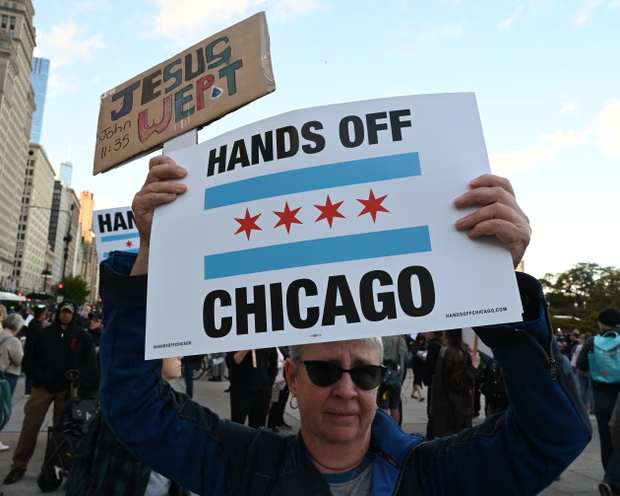
The United States Supreme Court has blocked President Donald Trump’s plan to deploy the National Guard to Chicago. The move aimed to protect Immigration and Customs Enforcement agents operating in the city.
The ruling marks a major setback for the White House. It also deepens tensions over federal authority in domestic law enforcement.
In an unsigned order issued on Tuesday, the court faulted the administration’s legal argument. The justices said the government failed to justify the use of military forces for law enforcement in Illinois.
“At this preliminary stage, the government has failed to identify a source of authority,” the court wrote. The justices added that the military cannot execute laws in Illinois under the current claims.
Supreme Court Draws Line on Federal Power
The decision stopped Trump’s effort to send troops to cities he has labelled “lawless” and “dangerous.” The plan followed weeks of political clashes between the White House and Democratic-led states.
Several governors opposed the move. Legal experts also raised concerns. They warned that troop deployment could erode state authority and civilian control.
Conservative Justices Disagree
Three conservative justices dissented from the ruling. They were Samuel Alito, Clarence Thomas, and Neil Gorsuch.
The dissenters argued that the president holds broad constitutional powers. They said those powers allow him to protect federal officers while they perform official duties.
They also criticised the court’s timing. According to them, the court acted too early in the case.
Wider Impact of the Ruling
The decision highlights limits on presidential power inside the United States. It also adds weight to long-standing restrictions on domestic military use.
Civil rights groups welcomed the ruling. They warned that military involvement in policing threatens democratic norms.
The judgment now blocks Trump’s strategy. It may also influence future disputes over troop deployment at home.