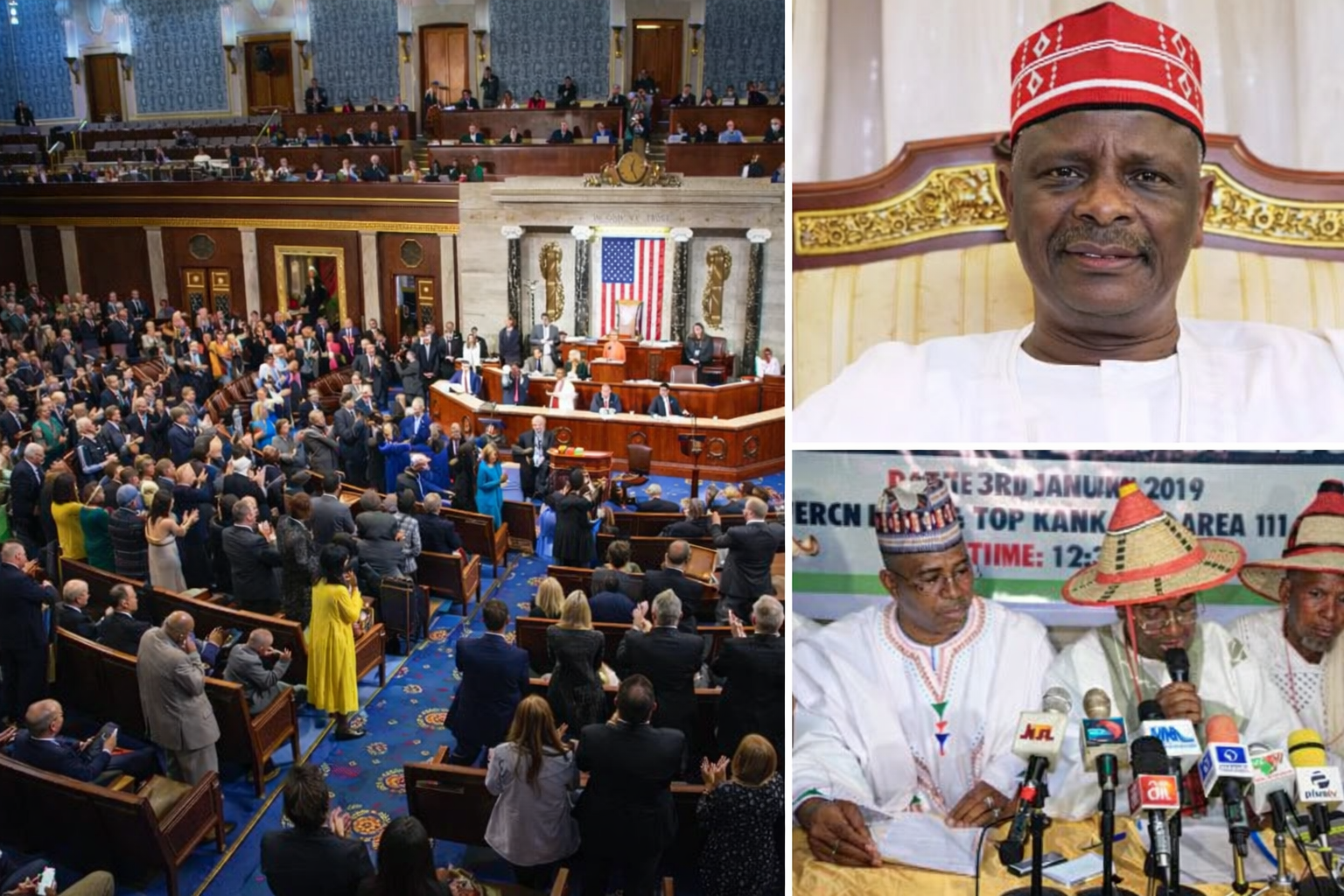
A group of Republican lawmakers in the US House of Representatives has introduced a bill seeking visa bans and sanctions against Rabiu Musa Kwankwaso and the Miyetti Allah groups over alleged religious freedom violations in Nigeria.
The lawmakers introduced the proposed legislation, titled the Nigeria Religious Freedom and Accountability Act of 2026 (HR 7457), on Tuesday, February 10, 2026.
Representatives Riley Moore of West Virginia and Chris Smith of New Jersey led the effort. Brian Mast, Mario Díaz-Balart, and Bill Huizenga backed the bill.
What the Bill Proposes
The sponsors say they drafted the bill to address what they describe as “ongoing religious persecution and mass atrocities in Nigeria, particularly against Christians.”
The bill urges the US Secretary of State to designate Fulani ethnic militias as a Foreign Terrorist Organization (FTO).
It also directs the US Departments of State and Treasury to impose targeted sanctions. These sanctions include visa bans and asset freezes. They would apply to individuals and entities accused of severe violations of religious freedom.
In addition, the bill names Rabiu Musa Kwankwaso, former governor of Kano State, the Miyetti Allah Cattle Breeders Association of Nigeria (MACBAN), Miyetti Allah Kautal Hore, and Fulani nomad militias as potential sanction targets.
Why Kwankwaso Is Mentioned
The lawmakers cite Kwankwaso’s implementation of Sharia criminal law in Kano during his tenure from 1999 to 2003 and 2011 to 2015.
They argue that those policies fueled religious tensions.
However, the bill does not cite a court judgment against him. Instead, it outlines allegations that could justify sanctions if Congress passes the measure.
Additional Measures in the Bill
Beyond sanctions, the bill proposes oversight steps.
It requires annual reports to Congress on Nigeria’s compliance with international religious freedom standards.
It also mandates a review of US aid to Nigeria. Lawmakers say the review will ensure American funds do not support alleged perpetrators of violence.
Furthermore, the bill urges collaboration with allies such as France, Hungary, and the United Kingdom to promote peace and accountability.
Debate Over Persecution Claims
The bill relies on claims of widespread Christian persecution.
For example, the International Society for Civil Liberties and Rule of Law (Intersociety) estimates that between 50,000 and 125,000 Christians were killed between 2009 and 2025.
However, some international investigations have described those figures as disputed or unverified.
Critics argue that Nigeria’s violence is complex. They point to ethnic tensions, land disputes, and herder-farmer clashes, especially in the Middle Belt. They say the crisis cannot be reduced to a single religious narrative.
What Happens Next
The bill remains at the introduction stage in the House of Representatives.
Lawmakers must pass it in both the House and the Senate. The US President must also sign it before it becomes law.
Until then, the proposed visa bans and sanctions remain proposals. They carry no legal force.