
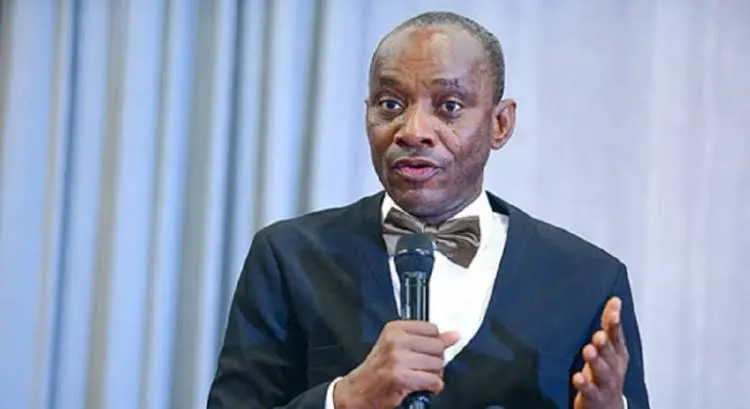
Sam Amadi, director of Abuja School of Social and Political Thought, has called for an independent forensic audit of the Independent National Electoral Commission’s (INEC) technical infrastructure ahead of the 2027 general election.
The policy expert argued that public confidence in the electoral body cannot be restored through internal assurances alone.
Speaking in an interview with News Central on Friday, Amadi said controversies surrounding the 2023 elections and recent concerns over access to voter registration records have heightened doubts about the integrity of INEC’s systems.
Amadi said opposition parties should make an independent assessment of the commission’s technological capacity a priority before the next election cycle.
“With all the issues around BVAS and this malfunction, which many people rightly think was an internal sabotage by INEC itself, not to electronically transmit election results, you expect that the first item on the agenda of any serious opposition party would be to subject INEC to an independent forensic audit,” he said.
ASSURANCES FROM INEC NOT ENOUGH
Amadi argued that trust in electoral systems should be based on independent verification rather than assurances from the commission itself.
“Nobody should trust INEC systems for voter register,” he said.
He added that the commission’s inability to electronically transmit presidential election results in 2023, despite repeated assurances that its systems were ready, calls for an urgent need for such an audit.
“INEC came out and said we are ready to electronically transmit. On the day of the election, INEC failed. The explanation was a glitch, but there was no evidence and no proof of that glitch,” he said.
According to him, elections are inherently adversarial contests and therefore require independent certification of the institutions and technologies involved.
“INEC is appointed by the president, who is a contestant. So the minimum should be an independent professional certification of processes,” he said.
Amadi said international standards organisations routinely certify systems and procedures to boost public confidence, arguing that a similar approach should be adopted for Nigeria’s electoral infrastructure.
He also raised concerns about allegations that unauthorised individuals may have gained access to parts of INEC’s databases, saying such claims underscore the need for external scrutiny.
“By the way, we talk about BVAS, we talk about the INEC portal. How secure are these?” he asked.
“There are allegations that some political actors could have access to the back end of these systems.”
The former regulator maintained that an independent audit would help remove speculation and reassure Nigerians about the credibility of future elections.
“The issue is how INEC will restore public trust,” he said.
“It should not be about trust. It should be about verification through an independent, professional, non-partisan audit of the systems.”

