Unitree Heads for a Record IPO
China’s humanoid robot industry is getting a major boost as Unitree prepares for its Shanghai stock market debut on Wednesday. The Hangzhou-based robotics company has already raised 6.1 billion yuan, about $905 million, in its initial public offering. Even more striking, investors oversubscribed the IPO by more than 8,000 times. That figure sets a new record for Shanghai’s tech-focused STAR Market, often compared with America’s Nasdaq.
The listing could also make Unitree the first humanoid robot maker to trade on mainland China’s stock market. Over the past year, the company has become a global talking point through its robots’ impressive dance moves, kung fu routines and backflips. Its rise reflects China’s bigger plan to lead the next wave of artificial intelligence and robotics.
From Viral Robots to Big Business
Unitree became widely known after its robots performed at China’s annual Lunar New Year gala. Since then, videos of its machines dancing and performing stunts have spread across social media. The company recently added another attention-grabber, the “Superman” humanoid robot. Unitree says the robot can jump up to two metres and run at 12.66 metres per second.
Behind the viral moments, however, Unitree has built a fast-growing business. Its revenue jumped more than tenfold in just two years, reaching nearly 1.7 billion yuan in 2025. The company also made a net profit of 278 million yuan. Last year, it sold more than 5,500 humanoid robots worldwide, making it the biggest seller in the sector. Robot dogs also remain important, contributing about 42% of its revenue.
The Robots Still Have a Long Way to Go
Despite the excitement, humanoid robots have not yet reached the stage where they can work everywhere humans do. Unitree still sells most of its humanoid robots to research and educational institutions. Industrial deployments accounted for less than 10% of its sales during the first three quarters of 2025.
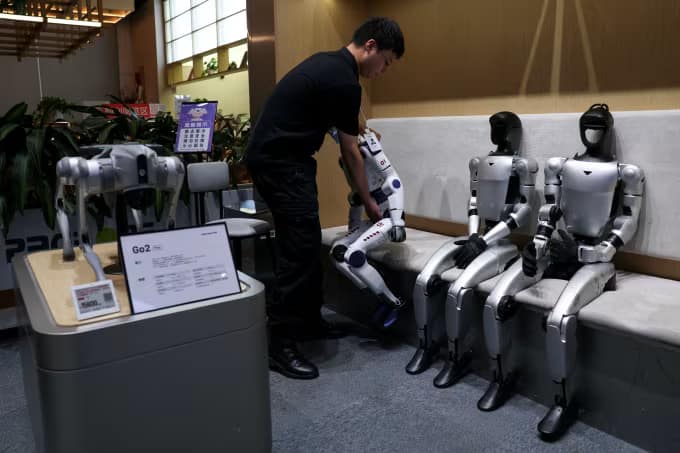
That gap shows the industry’s biggest challenge. Robots may look incredibly advanced during demonstrations, but real workplaces demand much more. They must understand changing environments, perform useful tasks safely and work reliably for long periods.
“Moving from demonstrations and early deployments to widespread industrial adoption will take time,” Morningstar analyst Kangyuxiao Li said.
US Restrictions Add Another Challenge
Unitree must also deal with rising geopolitical pressure. In June, the US added the company to its list of Chinese military-linked firms. Washington also moved to restrict new humanoid and quadruped robot imports from foreign manufacturers. That decision could affect Unitree because more than 40% of its revenue comes from overseas markets.
Still, the company is pushing ahead with its technology plans. Unitree announced a research partnership with Nvidia in June as it works to improve its embodied AI systems. These systems help robots understand their surroundings and decide how to act. As analyst Ethan Qi noted, Unitree has shown strong hardware and motion-control skills, but it needs stronger AI models.
Its record IPO could therefore become more than a financial milestone. It could set the pace for China’s rapidly growing humanoid robot race.