
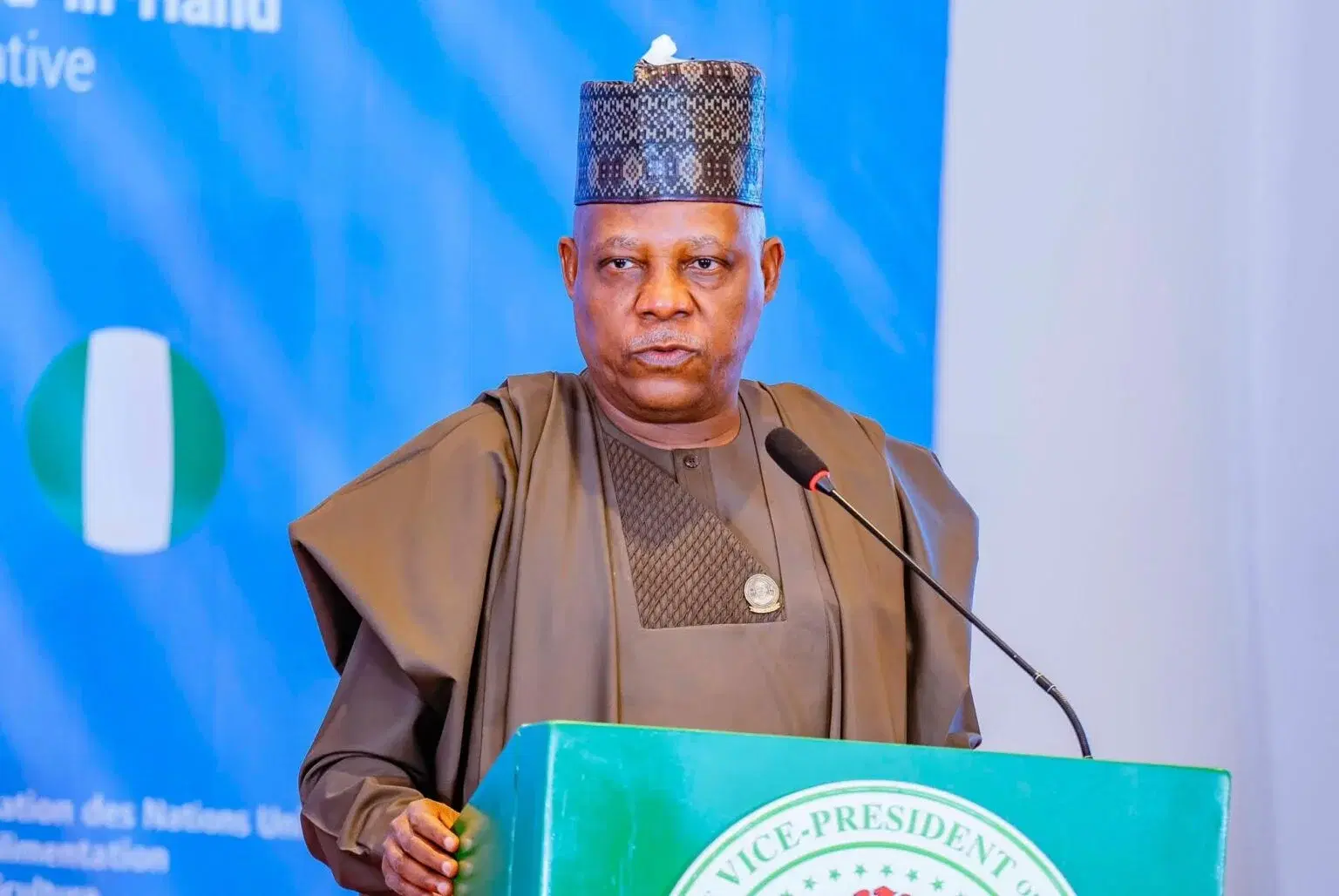
The Federal Government and the Niger Delta Development Commission (NDDC) have launched a $500 million Niger Delta Agriculture Investment Fund to boost food production, create jobs and drive industrial growth across the region.
Vice President Kashim Shettima unveiled the initiative on Wednesday during the Niger Delta Agricultural Development and Investment Summit at the Presidential Villa in Abuja.
The summit brought together the governors of the nine Niger Delta states, traditional rulers, development partners, diplomats and other key stakeholders.
Shettima outlines investment plan
Speaking at the event, Shettima said Nigeria’s economy relied on agriculture long before the discovery of oil.
He noted that agriculture laid the foundation for the country’s development and remains critical to its future prosperity.
“Before the barrel, it was the soil that paid our bills.”
According to the Vice President, the new investment fund will support agriculture across the entire value chain.
The fund will finance aquaculture, oil palm, cassava, cocoa, rice, horticulture, livestock and marine resources.
He said the initiative rests on three major pillars. These include the investment fund, existing financial commitments and a coordinating council.
Development partners back initiative
Shettima disclosed that the government had aligned financial commitments from several international institutions.
They include the World Bank, African Development Bank, Islamic Development Bank and the European Bank for Reconstruction and Development.
Private investors and commercial financiers have also joined the initiative.
He announced that the Niger Delta Agricultural Development and Investment Council would coordinate implementation.
The Vice President will chair the council, while the NDDC will serve as its secretariat.
According to him, officials are already preparing bankable agricultural projects across the region’s nine states.
Food security remains a priority
Shettima said President Bola Tinubu’s administration placed food security among its earliest priorities.
He recalled that the President declared a state of emergency on food security in July 2023.
That decision, he said, shifted attention from policy discussions to practical interventions in food production and market stability.
The Vice President urged governors, investors and development partners to support the initiative.
“The Fund is launched, the commitments are aligned, the council is constituted, and the pipeline awaits your conviction.”
Ogbuku says region is ready for investors
NDDC Managing Director, Dr Samuel Ogbuku, described the summit as a turning point for the Niger Delta.
He said the investment fund would unlock the region’s agricultural potential after decades of dependence on oil and gas.
According to him, the initiative will attract agribusiness investors while generating strong returns on investment.
Ogbuku also noted that the region has become one of Nigeria’s most peaceful areas for investment.
He said the commission now wants to attract private capital as international oil companies continue moving offshore.
“While the IOCs are moving offshore, we are inviting agribusiness into the Niger Delta. Agribusiness is capable of creating jobs, generating wealth and driving sustainable development across the region.”
Summit targets stronger partnerships
Earlier, the Senior Special Assistant to the President on Agribusiness and Productivity, Dr Kingsley Uzoma, said the summit seeks to unlock the Niger Delta’s vast agricultural potential.
He explained that poor coordination had limited investment despite the region’s enormous resources.
Uzoma said the initiative aligns with President Tinubu’s directive to expand non-oil investments and strengthen agriculture.
He expressed optimism that the summit would produce lasting partnerships and practical commitments.
According to him, the goal is to position the Niger Delta as one of Nigeria’s leading destinations for agricultural investment while supporting national food security and economic growth.
Read also: FG announces 160,000 homes nationwide for low-income Nigerians

