An 11-year-old girl went out to buy a birthday gift for a friend. She never came home.
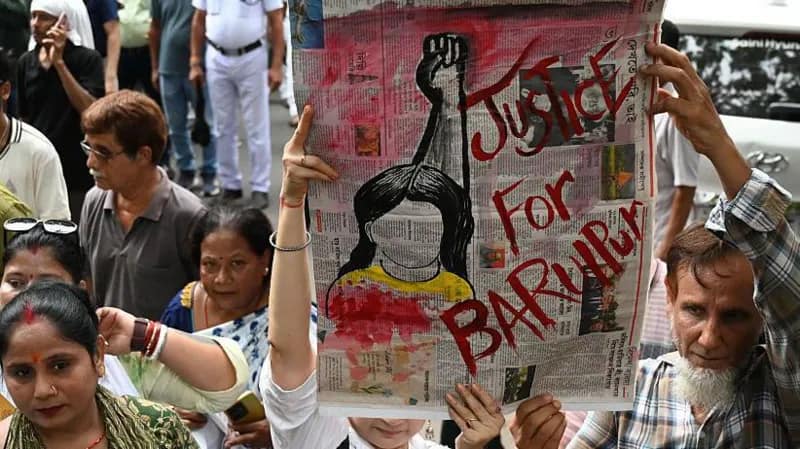
West Bengal, India, has been gripped by violent unrest following the rape and murder of an 11-year-old Muslim girl in Surjyapur village, Baruipur, on the outskirts of Kolkata. Her body was pulled from a pond on Sunday, a day after her family reported her missing to police — a report her relatives say the authorities did not take seriously.
CCTV footage from nearby shops identified a local man, Prabhash Mondal, walking with the girl before her disappearance. A mob located Mondal, beat him, and handed him over to the police. Hours later, the girl’s body was recovered from a pond. The post-mortem report listed drowning as the cause of death. This prompted relatives to claim she was alive when she was thrown in.
“Had the police acted earlier, she could have been saved,” her family said.
Days later, Mondal was shot dead by police during what they described as an encounter at the crime scene, saying he attempted to snatch an officer’s weapon. Rights activists and opposition politicians called the killing suspicious, with one describing it as a familiar pattern across Indian states. No charges against Mondal had been proven at the time of his death.
The incident has since exploded into a political crisis. West Bengal’s newly elected BJP government, which swept to power in May on a platform of women’s safety, now faces accusations of failing to deliver on its central campaign promise just two months after taking office. The case has also taken on religious dimensions, with the victim being Muslim and the arrested suspects Hindu.

Chief Minister Suvendu Adhikari visited the victim’s family and pledged justice. A special investigation team has been formed. Forty people have been detained following mob violence that left a young man dead, several police officers injured, and a railway station vandalised.
A child is dead. A community is burning. And the question of who failed her remains unanswered.