
Stakeholders Call for Urgent Investment in Data, Talent and Infrastructure
Experts across Africa’s technology, finance, and infrastructure sectors have warned that the continent risks remaining a raw input supplier in the global artificial intelligence economy.
They urged African countries to build strong ownership in data, talent, compute infrastructure, and funding systems.
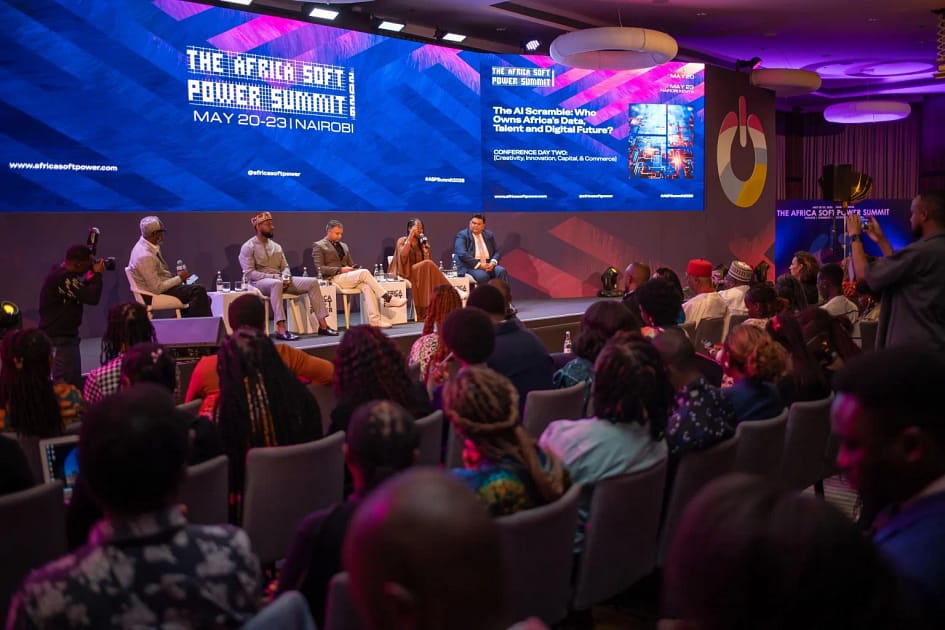
The warning dominated discussions at a high-level session titled “The AI Scramble: Who Owns Africa’s Data, Talent and Digital Future?” at the Africa Soft Power Summit 2026.
The summit held over the weekend under the theme Creativity, Innovation, Capital & Commerce. Organisers issued a statement on Monday.
Industry Leaders Raise Concerns
Key speakers included Google Africa Managing Director Alex Okosi, iXAfrica Data Centres CEO Snehar Shah, Amini founder Kate Kallot, and Standard Chartered Kenya banking executive Birju Sanghrajka.
Nairametrics founder Ugodre Obi-Chukwu moderated the session.
Okosi warned that Africa must not remain only a consumer of AI technologies.
He said the continent must take part in the systems that power artificial intelligence.
He added that AI systems must understand African languages and dialects to solve local problems effectively.
Okosi also warned that Africa risks repeating the digital media era, where global platforms controlled most value creation.
Africa Risks Data Extraction Model
Kate Kallot said Africa risks repeating an extractive model similar to its commodity trade history.
She explained that data now plays the same role as raw materials once did.
According to her, Africa supplies inputs but often loses ownership of the systems that process them.
She identified data, infrastructure, and talent as the three key pillars Africa must strengthen.
Kallot also called for stronger governance systems, better data ownership, and increased investment in education and infrastructure.
She warned that without these measures, Africa would continue to train AI models without benefiting commercially.
Infrastructure Gap Remains Wide
Snehar Shah noted that Africa still holds a small share of global digital infrastructure.
He said the continent must combine global partnerships with strong local capacity building.
However, he pointed to opportunities in renewable energy, connectivity, and data centre expansion.
He highlighted Kenya’s geothermal energy and ongoing infrastructure projects as positive examples.
Financing AI Still a Challenge
Birju Sanghrajka said financial institutions need clearer business models before funding AI ventures at scale.
He noted that banks understand infrastructure projects like data centres and power plants better than AI startups.
However, he said AI businesses must show stronger revenue models and clearer demand signals.
He added that both investors and innovators must improve their understanding of each other to unlock capital.
Summit Emphasises Economic Transformation
Other sessions at the summit examined diaspora influence, investment flows, and the role of creators in economic growth.
The discussions reinforced the need for Africa to turn talent and creativity into long-term economic value.
The Africa Soft Power Summit 2026 focused on aligning finance, creativity, and human capital for sustainable growth.
Organisers said the platform aims to amplify African voices in global policy, business, and cultural conversations.

