By ALO360 Editorial Board
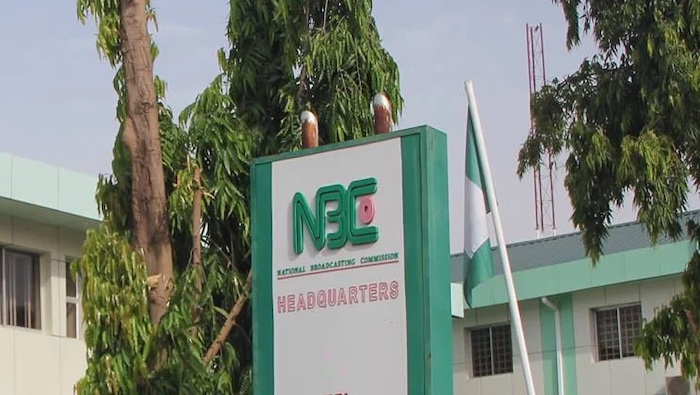
The latest announcement by the National Broadcasting Commission (NBC), in which the regulatory body threatened to sanction journalists and broadcast stations over “personal opinions”, ahead of the 2027 general election, raises serious concern for media professionals.
No one disputes that broadcasting requires standards. Fairness, balance, and accuracy are not optional in journalism; they are foundational. A media space without ethical guardrails can quickly descend into chaos, misinformation, and reckless partisanship. On this point, the NBC is right to remind broadcasters of their responsibilities. But regulation must not become repression.
The troubling aspect of the NBC’s directive lies not in its call for professionalism, but in its tone, timing, and sweeping scope. By classifying a wide range of presenter conduct, from expressing opinions to “intimidating” guests, as sanctionable offences, the commission risks blurring the line between legitimate regulation and censorship.
Journalism is not a mechanical exercise in absolute neutrality. It involves analysis, interrogation, and, at times, strong editorial judgement. To demand that presenters strip themselves entirely of opinion is to misunderstand the very nature of modern broadcasting. It also creates a dangerous grey area where critical questioning of public officials can be labelled as bias or intimidation.
The Court of Appeal in Abuja, in April 2026, upheld a landmark ruling that barred the NBC from imposing fines on broadcast stations, affirming that such punitive powers are unconstitutional. The court made it clear that the commission cannot act as both complainant and judge, as this violates Section 6 of the 1999 Constitution, which vests judicial authority solely in the courts. The ruling also set aside previous sanctions imposed on dozens of stations and reinforced earlier decisions, including a 2024 Federal High Court judgment that restrained the NBC from suspending or penalising media houses.
In simple terms, the courts have already drawn a line: the NBC is a regulator, not a tribunal.
Against this backdrop, the commission’s renewed threat of sanctions raises legitimate questions. Is this about enforcing standards, or about exerting control?
Civil society organisations have not been silent. Amnesty International described the NBC’s notice as an “outrageous and desperate attempt” to gag the media and force journalists into self-censorship. According to the organisation, the directive places “unduly restrictive and invasive controls” on broadcasters and undermines the right to freely seek, receive, and impart information.
Similarly, the Socio-Economic Rights and Accountability Project (SERAP) has warned that the NBC’s action amounts to prior censorship and violates both the Nigerian Constitution and international human rights obligations.
SERAP argued that journalism necessarily includes commentary, analysis, and value judgment elements that cannot be subjected to blanket prohibition. It also noted that vague standards such as “professionalism” or “intimidation” are open to abuse and can be used to arbitrarily target critical voices.
This is where the danger lies. A regulation that is vague, overbroad, and backed by threats of sanctions does not strengthen journalism; it weakens it. It creates a chilling effect and encourages self-censorship. It makes journalists second-guess legitimate questions, especially when dealing with those in power.
And in an election season, that is a risk Nigeria cannot afford.
The media’s role in a democracy is not to comfort the government. It is to question it, scrutinise it, and, when necessary, confront it. If broadcasters begin to pull their punches for fear of sanctions, the public loses its most important watchdog. Section 22 of the 1999 Constitution is clear. The media must hold the government accountable to the people.
The NBC must therefore strike a careful balance. Yes, it must enforce standards. Yes, it must discourage hate speech and misinformation. But it must do so in a manner that is precise, lawful, and respectful of constitutional freedoms.
More importantly, enforcement must not be selective or targeted at stations that hold the government accountable.
There is also a deeper reality that cannot be ignored. Nigeria today faces serious challenges. Insecurity, economic strain, and persistent power issues. Citizens feel it daily. When government spokespersons appear on air to dismiss or downplay these concerns, it is only natural for journalists to push back.
That pushback is not indiscipline. It is journalism.
If anything, public officials must learn to engage honestly, acknowledge failures where they exist, and provide credible answers. Attempting to manage perception through regulation, rather than performance, will only deepen public distrust.
The NBC must remember that credibility in broadcasting is not enforced through fear. It is earned through trust.
As the 2027 elections approach, Nigeria needs more speech, not less. More scrutiny, not silence. More accountability, not control.
Regulation is necessary. But it must never become a weapon.

