
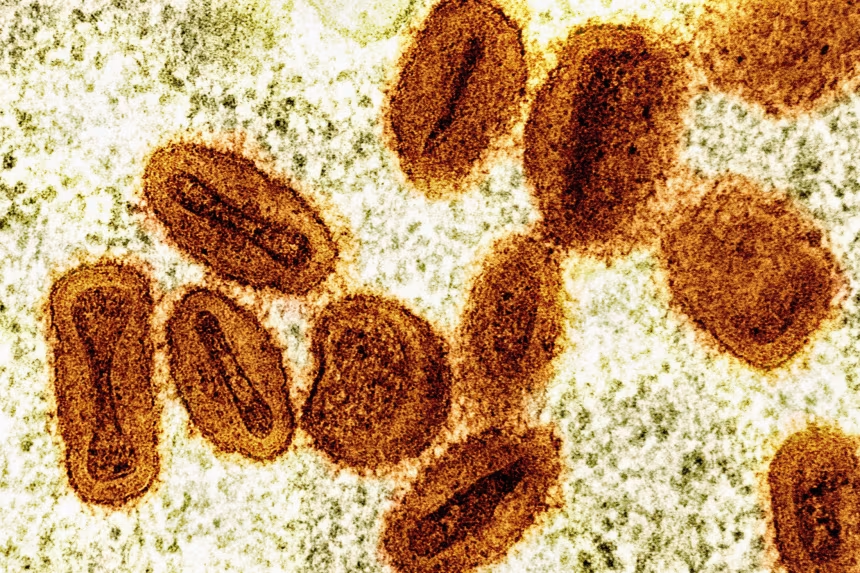
Federal Charges Against Montana Virologists
Authorities charged two scientists from a U.S. government lab on Tuesday. Vincent Munster and Claude Kwe allegedly smuggled deactivated mpox virus vials into the country. Munster leads the virus ecology section at Rocky Mountain Laboratories in Montana. Kwe works alongside him at the same facility. A federal court in Detroit unsealed the criminal complaint against both men.
Incident at Michigan Airport
The incident began in January at Detroit Metropolitan Airport. Both scientists arrived on a flight from Paris after visiting the Republic of Congo. During an initial interview, Munster denied carrying any biological materials. However, subsequent tests revealed the presence of deactivated mpox vials in their luggage. The FBI stated that the pair failed to declare these samples or obtain required permits.
Potential Risks and Breach of Trust
Marcus Sykes from the Department of Health and Human Services criticized the actions. He noted that smuggling unauthorized biological materials breaches public trust. Such actions could potentially place the public at risk. While the virus samples were deactivated, federal law still requires strict documentation. The FBI quoted Munster claiming he possessed the necessary papers on his laptop, but investigators found this statement false.
Ongoing Investigation and NIH Response
The National Institutes of Health (NIH) is cooperating fully with law enforcement. The agency oversees the lab where both men work. Because this remains a personnel matter, the NIH limited its public comments. Both scientists expect to appear in a Montana federal court on Wednesday. They have not yet responded to requests for comment regarding the smuggling allegations.
Context of the Mpox Outbreak
Mpox recently caused a significant health crisis in the Republic of Congo. The disease has linked to over 2,000 deaths in that region. Historically, mpox caused rashes and fevers in patients. Most people recover fully, but the virus can sometimes cause serious illness. The virus gained global attention in 2022 after spreading through sexual contact in over 70 countries.

