
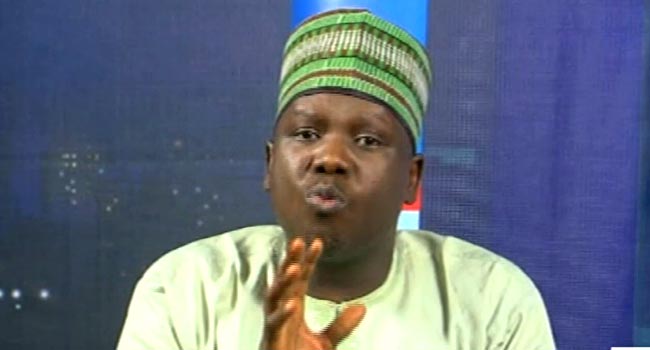
Daniel Bwala, special adviser to President Bola Tinubu on policy communication, says Nigerians are struggling to see the benefits of Tinubu’s economic reforms because of the nation’s huge population.
Speaking in an interview on Arise Television on Tuesday, Bwala said the benefits of ongoing reforms would take time to spread across the country.
“The answer is simply population and resources,” he said.
“The population is over 230 million. The resources we have, however increased, are not enough to match the population and the deficit in terms of infrastructure.”
He said economic growth under the current administration would be gradual rather than immediate.
“Growth will have to be slow, but it will be slow, steady and consistent,” Bwala said.
“That is what we take pride in.”
STATES HAVE MORE MONEY
Responding to questions about the tangible benefits of the administration’s reforms three years after Tinubu assumed office, Bwala argued that increased government revenue has translated into higher allocations to states.
He said those allocations have enabled state governments to undertake projects and programmes that directly affect citizens.
“When you talk about increased revenue, the effect of that increased revenue is the increased allocation to states,” he said.
“That has resulted in state administration and has also resulted in impact on the people.”
However, when challenged on how higher allocations automatically improve the lives of ordinary Nigerians in a country plagued by corruption, Bwala maintained that the funds belong to the states rather than individual governors.
“The money is not to the governors, the money is to the states,” he said.
When the interviewer pointed out that governors ultimately control state finances, Bwala replied: “The governors are just the chief accounting officers of the state.”
He compared governors to chief accountants in organisations who oversee funds without personally owning them.
“The point to be made is that the money is to the states,” he said.
“The governor is the chief accounting officer, but he doesn’t own the money.”
Bwala’s remarks come amid continued debate over whether the economic reforms introduced by the Tinubu administration, including fuel subsidy removal and foreign exchange liberalisation, have translated into meaningful improvements in the living conditions of ordinary Nigerians.

