
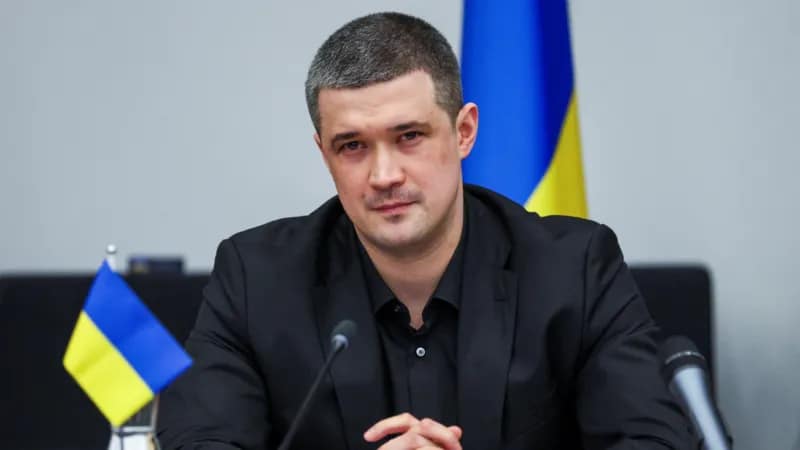
Former Ukrainian Defence Minister Mykhailo Fedorov has called for presidential elections to be held despite the ongoing war with Russia, putting forward one of the strongest challenges yet to the political status quo under President Volodymyr Zelensky.
In a video posted on YouTube on Tuesday, Fedorov argued that Ukraine’s democratic process should not be suspended indefinitely because of the war. “Democracy cannot be held hostage by Russia,” the 35-year-old said, arguing that Ukraine was fighting to remain “a free European state”.
Ukraine has remained under martial law since Russia launched its full-scale invasion in February 2022. Under the current conditions, national elections cannot be held. This means the presidential election originally due during wartime has been suspended.
Although Fedorov did not mention Zelensky by name, his call for elections is being viewed as a significant political challenge to the president.
Dismissal from Office
Fedorov was unexpectedly removed as defence minister in late July, only six months after taking up the position. His dismissal sparked protests in parts of the country. It also came amid reported tensions between him and Ukraine’s army commander-in-chief, Oleksandr Syrskyi.
Syrskyi was himself replaced several weeks later, adding to the political pressure surrounding Zelensky’s administration. In his video, Fedorov did not announce any plans to run for president or reveal a broader political agenda. Instead, he called for Ukraine to develop what he described as a “legal, safe, and realistic mechanism” for restoring a full democratic process while the war continues.
He also warned that Ukraine was facing what he called a “systemic crisis of governance”. Fedorov said the country was “scared of change” and argued that corruption was undermining the war effort.
His comments come after a period in which he had been credited with modernising Ukraine’s defence administration. During his brief tenure as defence minister, he pushed for greater use of data to assess military performance and continued efforts to tackle corruption. He also maintained a strong focus on drone technology and high-tech warfare.
A Handful of Contributions
Before becoming defence minister, Fedorov served as Ukraine’s minister of digital transformation. Having become one of the country’s most prominent figures in technology and military innovation. In the early stages of Russia’s full-scale invasion, he helped establish the volunteer “IT Army of Ukraine”, which was involved in cyber operations targeting Russian interests.
He later played a leading role in the Army of Drones fundraising campaign. One which helped provide Ukraine’s armed forces with unmanned systems. He also introduced elements of gamification into military operations. Thus creating a system that rewarded Ukrainian units with credits for successful strikes against Russian targets.
As defence minister, Fedorov continued to prioritise drones, technology and defence procurement. He also appealed to SpaceX founder Elon Musk to prevent Russian forces from using Starlink satellite communications in support of drone operations. The move was credited with disrupting some Russian activities on the battlefield.
Offers Post-Dismissal
Following his dismissal, Fedorov said he intended to continue contributing to Ukraine’s war effort through innovation and unconventional strategies.
Zelensky has since appointed Yevgeniy Khmara, a career intelligence official with a relatively low political profile, as acting defence minister. The Ukrainian government reportedly offered Fedorov other positions, including deputy prime minister for military innovation. However, he has indicated that he would only return to government as defence minister.
For now, Fedorov’s demand for elections raises difficult questions about how Ukraine can balance democratic accountability with wartime security. With martial law still in place, any attempt to hold a presidential vote would require a mechanism that addresses the practical and legal challenges created by the conflict.
The issue also places renewed attention on Zelensky’s political future as the war continues. Also as debate grows over how Ukraine should preserve democratic institutions under prolonged wartime conditions.
READ ALSO: https://alo360.net/pakistan-supreme-court-imran-khan-hospital/