
By ALO 360 Editorial Board
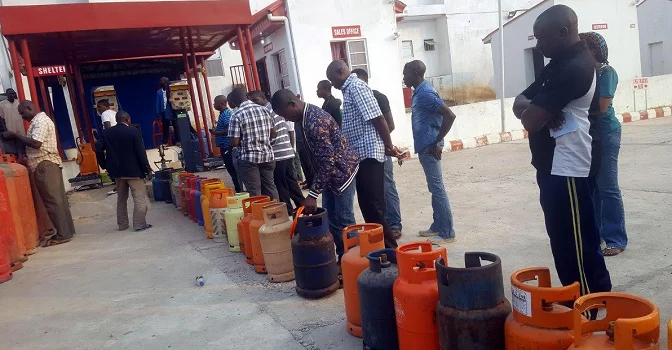
The latest increase in the price of cooking gas should concern every Nigerian and alarm every government official. In many parts of the country, the price of cooking gas has reportedly risen from about N1,200 per kilogram to as much as N2,400. For households already grappling with petrol prices of about N1,300 per litre and diesel prices approaching N1,700, this is yet another blow in what has become a relentless assault on living standards.
Three years into President Bola Tinubu’s administration, Nigerians are still waiting for the promised benefits of economic reforms. What they have received instead is a steady stream of explanations, assurances and appeals for patience. The patience is evident. The dividends are not.
To be clear, reforms are not the problem. Every serious economy occasionally requires difficult decisions. Fuel subsidy removal was not a new idea. Exchange rate reforms were not invented by the current administration. The problem is that Nigerians are being asked to bear the costs of reform without seeing any corresponding improvement in their quality of life.
The average Nigerian family today faces a crisis on multiple fronts. Food prices remain unaffordable. Transportation costs have skyrocketed. Electricity tariffs continue to rise. Rent is increasingly beyond reach. Healthcare has become a luxury for many. School fees are forcing parents into difficult choices. Now, even cooking a simple meal has become more expensive.
At what point does the government admit that the burden has become unbearable?
President Tinubu recently acknowledged that fuel prices have risen partly because of global developments, including the conflict in the Middle East. He suggested that Nigerians should be grateful that the situation is not as severe as it is in some other countries. But this is hardly reassuring to citizens who cannot afford basic necessities. Nigerians do not measure their hardship against Kenya or any other country. They measure it against their own reality.
Citizens do not buy food with economic theories. They do not pay rent with promises of future prosperity. They do not fill their gas cylinders with macroeconomic indicators. They live in a country where prices rise almost weekly while incomes remain stagnant.
Perhaps the most troubling aspect of the current economic programme is the absence of visible cushioning measures. Around the world, governments that implement painful reforms typically provide support systems to protect the most vulnerable. Whether through transport subsidies, food assistance, healthcare interventions or targeted welfare programmes, citizens are helped through the transition.
In Nigeria, millions have been left to navigate the storm alone.
Government officials frequently point to increased revenues resulting from subsidy removal. State governments are receiving higher allocations. Public revenues have improved. Yet ordinary Nigerians are entitled to ask a simple question: where is the impact?
If government revenues have increased so significantly, why are public schools still struggling? Why are hospitals still underfunded? Why are roads still deteriorating? Why are unemployment and poverty still widespread? Why does daily life continue to become more difficult?
These questions become even more pressing when citizens witness what appears to be a culture of excess among public officials. Luxury vehicles continue to be purchased. Convoys continue to grow. Political office holders continue to enjoy privileges far removed from the realities of those they govern. It is difficult to preach sacrifice to citizens while government appears unwilling to sacrifice anything itself.
The N70,000 minimum wage illustrates the problem. While it may have appeared substantial when announced, inflation has rapidly eroded its value. A worker earning N70,000 today is often poorer than a worker earning far less a few years ago. The conversation must therefore move beyond minimum wage to living wage. A wage should provide dignity, not merely survival.
Economic reforms should ultimately improve the lives of citizens. That is the standard by which they must be judged. Not by revenue figures. Not by official statistics. Not by praise from international institutions. The true measure of success is whether ordinary Nigerians can afford food, transportation, healthcare, housing and education.
Three years after the commencement of these reforms, that question remains unanswered.
Nigerians have sacrificed enough. They have endured inflation, rising energy costs, shrinking purchasing power and declining living standards. What they deserve now is not another lecture on why reforms are necessary. They deserve evidence that those reforms are working.
Until then, the question will continue to echo across markets, homes, offices and transport parks across the country: how much more sacrifice must Nigerians make before the promised benefits finally arrive?

