
AI Becomes Creative Tool for Struggling Musician
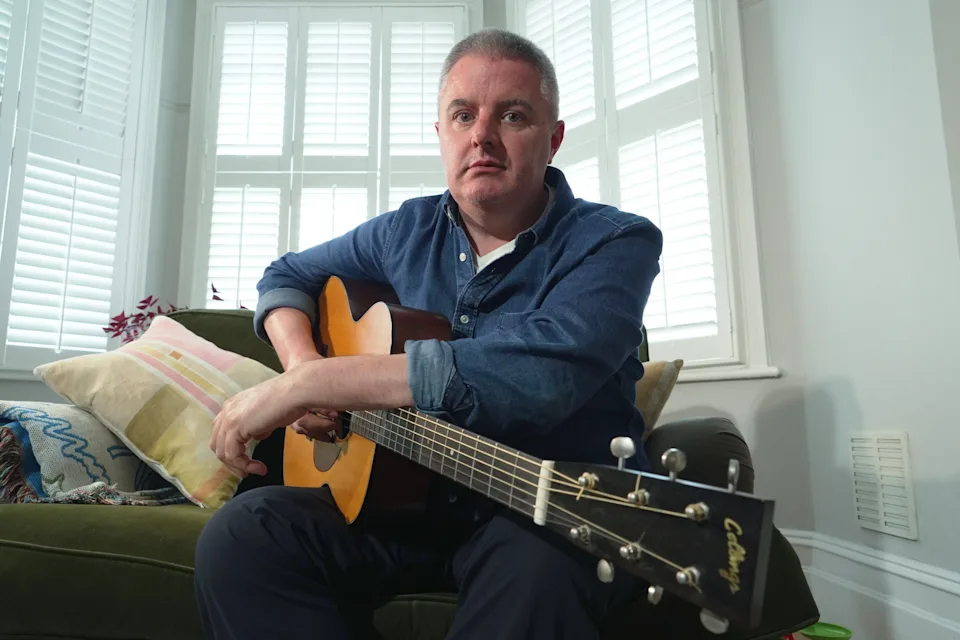
British singer-songwriter Samuel Smith has turned to artificial intelligence tools to keep making music after Parkinson’s disease severely affected his ability to play guitar.
Smith, who was diagnosed in 2020, has spent years building his career around songwriting and guitar performance. However, the progressive neurological disorder has gradually limited his physical ability to perform.
Despite these challenges, he recently released his second album titled The Art of Letting Go.
AI Tools Support Song Development Process
Smith used AI platforms such as Suno and Udio to generate demo arrangements for one of the album’s tracks, “Horizon.”
He did not use AI in the final studio recordings. Instead, he used it to shape ideas and guide musicians during production.
The singer recorded rough melodies by humming into his phone. He then uploaded them into AI tools to create reference tracks.
He said the system required multiple attempts before producing usable results.
“It then brings it to life in a way that I can play to session players and say, ‘Here, that’s what I’m thinking,’” Smith explained.
Disease Forced Shift in Creative Process
Smith said Parkinson’s symptoms such as tremors, stiffness and fatigue made guitar playing increasingly difficult.
As a result, he had to rethink how he writes music.
“So then I’m faced with a question: don’t play, don’t be creative, or find a way out,” he said. “For me, this was the route.”
He stressed that AI did not replace his creativity. Instead, it helped him express it in a different form.
Music Industry Remains Divided Over AI Use
The use of generative AI in music continues to divide the industry.
Major record labels, including Sony Music Entertainment, Universal Music Group and Warner Records, have raised concerns over copyright issues involving AI training data.
Some companies have taken legal action against AI music platforms, although later partnerships and settlements have also emerged.
Critics argue that AI could weaken artistic originality. However, supporters say it can expand access to music creation.
Experts Highlight Benefits and Risks
Ruaidhri Mannion, a composer and lecturer at Brunel University of London, said AI tools could help more people participate in music creation.
He noted that digital tools have already made music production more accessible in recent years.
However, he warned that overreliance on AI could reduce the trial-and-error process that shapes artistic growth.
“There’s a lot of experimentation and failure that’s part of musical discovery,” he said.
Collaboration with Top Musicians
Smith worked with Grammy-winning producer Matt Rollings and several renowned musicians, including Jerry Douglas, Alison Brown and Stuart Duncan.
He described recording in Nashville as an emotional milestone.
Guitarist Julian Lage also contributed to the album, including a duet with Smith on “Horizon.”
Smith said he briefly regained enough mobility during recording to play guitar again for a short moment.
“That’s what happened. I had a window of about 10 minutes,” he said.
Debate Over AI and Artistic Ownership Continues
AI music companies Suno and Udio have denied copyright violations and say they aim to cooperate with the music industry.
However, several artists remain unconvinced and continue to raise concerns about compensation and creative control.
An open letter signed by musicians and industry figures warned against AI systems trained on copyrighted works without permission.
AI Seen as Tool for Inclusion and Creativity
Smith believes AI can support people facing health or physical challenges if used responsibly.
He urged tech companies to work with healthcare professionals and artists to improve accessibility.
“My message is that they should show what they can do for society,” he said.
Music Remains Central to His Legacy
Smith said music helps him cope with his condition and preserve a legacy for his children.
“My 4-year-old may never remember me playing,” he said. “But I refuse to be defined by this disease.”

