
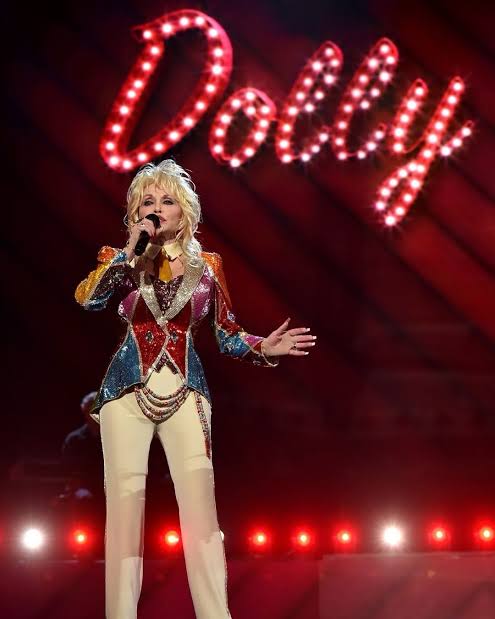
There are some people whose absence feels bigger than the space they occupied. Dolly Parton was one of those people. When news of her death at 80 broke on August 25, 2026, the world did not simply lose a country music legend. It lost a woman who spent almost six decades turning songs, success and personal history into something useful for other people.
Dolly was easy to underestimate if you only looked at the obvious things. There was the towering blonde hair, the rhinestones, the playful humour and the famous Southern charm. Behind all that was a remarkably sharp songwriter, businesswoman and philanthropist who understood people very well. She knew what poverty felt like, what rejection sounded like and what it meant to dream before anyone took your dream seriously. More importantly, she never became embarrassed by the woman she had been before fame arrived.
She Made Her Beginnings Part of Her Greatness
Dolly Rebecca Parton was born in 1946 in rural Tennessee, the fourth of 12 children. Her family lived in a small cabin and had very little money. Her father could not read or write, while her mother filled their home with songs, stories and faith. Those early experiences later became some of the richest material in Dolly’s work.
You can hear that childhood in Coat of Many Colors. The song came from a real memory about a coat her mother made from scraps because the family could not afford a new one. Other children laughed at Dolly for wearing it. Instead of allowing that humiliation to define her, she turned it into a song about love, dignity and the strange wealth that money cannot buy.
That ability to transform pain into something beautiful became one of Dolly’s greatest gifts. Jolene turned romantic insecurity into a song understood across generations. 9 to 5 gave working women a furious but joyful soundtrack. Then there was I Will Always Love You, a song Dolly wrote herself before Whitney Houston later carried it into another universe. Her songwriting was never just about melody. She knew how to take ordinary human feelings and give them words people wished they had written themselves.
The Star Who Never Forgot the Girl From Tennessee
Dolly’s career eventually grew far beyond country music. She became an actress, producer, author and businesswoman, while building a catalogue that made her one of the most recognisable entertainers in the world. Dolly joined the Country Music Hall of Fame and later the Rock & Roll Hall of Fame and Songwriters Hall of Fame. She also received the National Medal of Arts and Kennedy Center Honors.
Yet her most interesting achievement may not be sitting inside a trophy cabinet.
In 1995, Dolly launched the Imagination Library, inspired partly by her father’s inability to read. The programme began in her home county in Tennessee and grew into an international literacy movement. Children from birth to age five receive carefully selected books at no cost to their families. The programme has now distributed more than 330 million books across participating communities.
There is something deeply moving about that story. A woman who grew up knowing what it meant to have very little eventually became responsible for putting millions of books into children’s hands. She did not simply remember her father. She built something in his honour that keeps reaching children she will never meet.
That is what makes the philanthropy feel different.
It was personal.
Her Kindness Had a Practical Side
Dolly’s generosity also reached people facing immediate hardship. After wildfires devastated parts of Tennessee in 2016, her My People Fund gave affected families $1,000 each month. During the COVID-19 pandemic, she donated $1 million to Vanderbilt University Medical Center, supporting research connected to vaccine development. In 2024, she donated another $1 million following Hurricane Helene.
She also invested in her home region through Dollywood and supported education and community development. Her giving often carried the same quality as her music: it felt direct, warm and understandable. She did not need to make generosity look complicated.
Perhaps that is one reason people connected with her so deeply. Dolly did not behave as though fame had separated her from ordinary life. She understood that a book arriving in a child’s mailbox could matter more than another award. She understood that a family rebuilding after a disaster needed help, not a speech about compassion.
For all the glitter around her, she remained remarkably grounded in the simple question of what could make somebody else’s life a little better.
What Dolly Parton Leaves Behind
Dolly’s legacy is therefore much larger than her music. Her songs will continue to travel from old record collections to streaming playlists. Younger listeners will continue discovering Jolene and 9 to 5 and wondering how somebody wrote songs that still sound so alive decades later.
But the deeper legacy is quieter.
It lives in a child opening a free book at home… in a family receiving help after losing almost everything. It lives in an aspiring songwriter learning that vulnerability can become strength. Again, it lives in anyone who has ever felt ashamed of where they came from and needs reminding that their beginnings do not have to determine their ending.
Dolly understood that better than most.
She could have spent her fortune trying to distance herself from the poverty of her childhood. Instead, she kept returning to it through her songs, her stories and her giving. She took the things that once made her different and made them central to her identity.
That is why the rhinestones were never really the point…
The real sparkle was the woman underneath them.
Dolly Parton showed the world that ambition does not have to kill tenderness. She proved that a person can become enormously successful without becoming unreachable. She made room for glamour and humility, humour and heartbreak, business and generosity.
And now that she is gone, perhaps the question her life leaves behind is not simply how much she achieved.
It is what we will do with what we have.
Dolly received very little as a child, yet she spent her life giving. She inherited hardship, but she returned possibility. She inherited a world where her circumstances could have limited her, then spent decades making sure circumstances would not have the final word for somebody else.
That is a beautiful way to be remembered.
Not only as the woman who sang the songs we loved, but as the woman who kept finding ways to make life a little kinder for people she might never know.

