
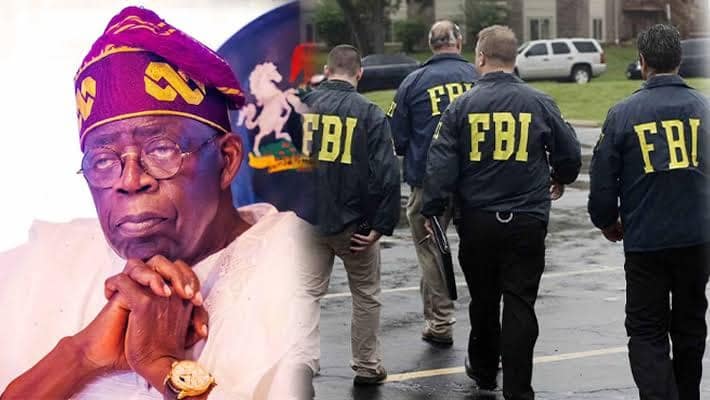
The United States Federal Bureau of Investigation has asked a federal court to allow it to privately explain why some records linked to President Bola Tinubu should remain withheld under the Freedom of Information Act.
The request is part of an ongoing FOIA lawsuit filed by American transparency advocate Aaron Greenspan. He is seeking records connected to a Chicago narcotics investigation from the early 1990s.
In April 2025, US District Judge Beryl Howell ruled that the FBI and Drug Enforcement Administration could no longer rely on “Glomar” responses to refuse to confirm or deny the existence of records concerning Tinubu. The court instead ordered the agencies to process and release any records that are not exempt from disclosure.
FBI seeks permission to file secret explanation
In a recent filing, the FBI said it could not publicly provide the full basis for withholding some of the material. The bureau relied on FOIA Exemptions 7(E) and 7(F). The provisions cover information that could reveal law enforcement techniques or create risks to individuals’ safety.
The FBI has asked Judge Howell for permission to submit a confidential declaration to the court. It said the filing would explain its position without publicly disclosing sensitive information. The bureau proposed submitting the sealed declaration by August 28, 2026, if the court grants its request. Recent reports on the filing said the motion was dated August 20.
Case involves records from 1990s investigation
Greenspan filed the lawsuit after US agencies declined to fully provide records he requested under FOIA. His requests include FBI records concerning Tinubu and materials connected to a Chicago-area investigation into an alleged Nigerian heroin distribution network in the early 1990s. The case also involves records concerning other individuals.
The litigation has continued for several years, with the court repeatedly directing the agencies to address outstanding FOIA requests. Judge Howell has also rejected requests for further delays and ordered the FBI and DEA to process non-exempt records. The court has required the agencies to provide sworn explanations for their searches and any redactions or withholdings.
Court order does not establish criminal wrongdoing
The ongoing case concerns the disclosure of government records under the US Freedom of Information Act. It does not amount to a finding that Tinubu committed a crime. The April 2025 ruling dealt with whether the FBI and DEA could continue using Glomar responses and whether they had met the legal requirements for withholding the requested information.
Tinubu has denied wrongdoing, and the FOIA litigation itself is not a criminal prosecution against the Nigerian president. Recent reporting also confirms that Tinubu joined a US government request for additional time in the case, although Judge Howell set a shorter deadline than the government initially sought.

